How to Fail Better
There’s no getting away from it. Fails, errors, mistakes and beyond repair disasters happen. Painting is never a sure thing. When we start a painting, there is always the chance that something will go wrong, and usually does.
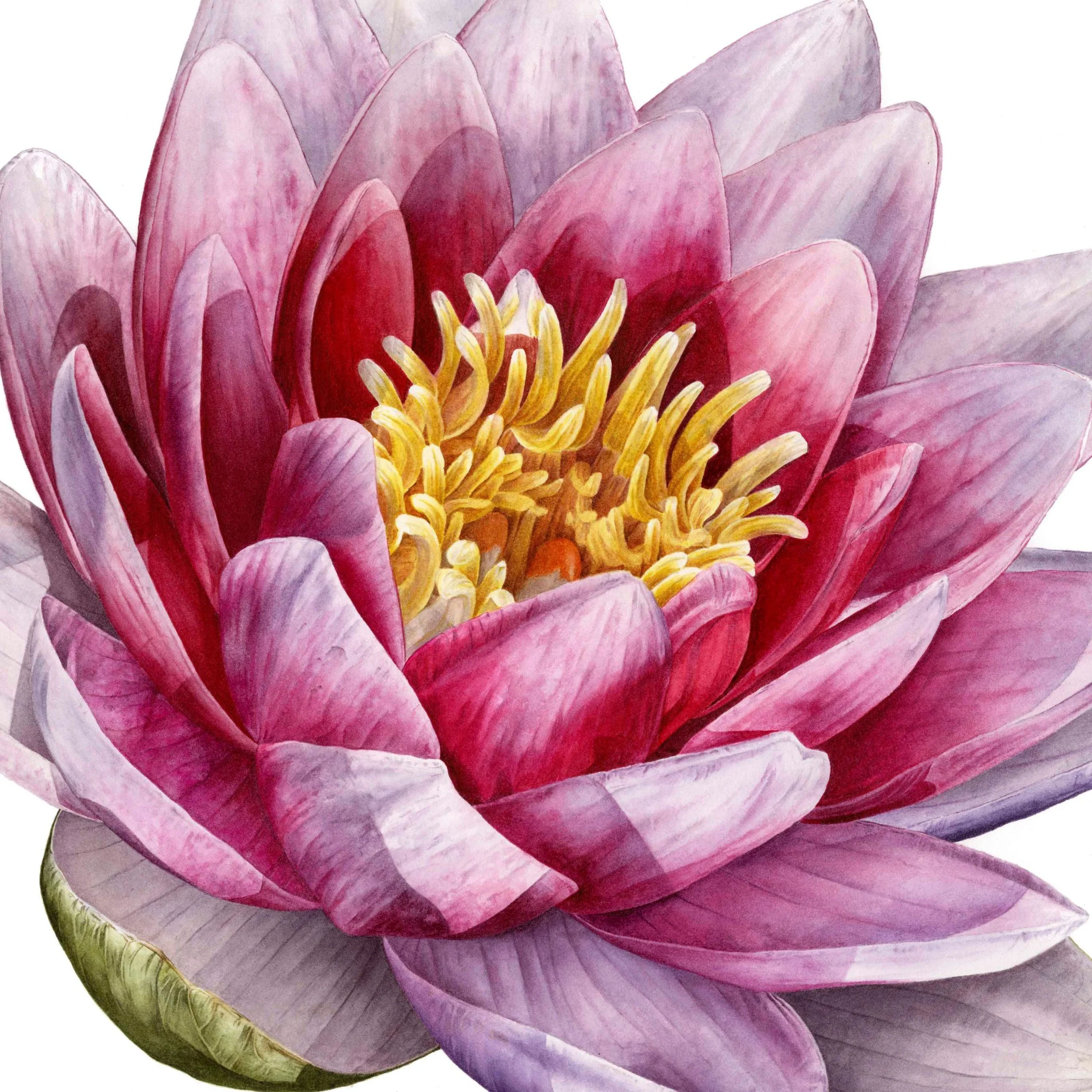
Waterlily is still one of my all time favourite paintings. And yes, she does have an error which had to be worked with.
‘Waterlily’ (permanent collection of the Hunt Institute for Botanical Documentation. USA)
I have been thinking long and hard about how to write this post. It can be really hard to admit to failure, and even more difficult to then share the experience. In a world where perfection is celebrated, failure can be seen as weakness, and is most often hidden. In many ways we learn more from the mistakes that we make, but very few artists actually talk about it. So here we go…
When I first started botanical painting, it felt like a continuous uphill struggle. Everything I started seemed to go wrong, and I felt like I was battling to work out how to put things right with every painting. The process of not giving up on a piece and actively working out how to correct it taught me a lot. It’s easy to start again and just do it all again, but what of we don’t have to? What if we can understand what needs to be done to fix the problem, and have the techniques on hand to do it? That’s what has always interested me in my own work. Never mind the perfection, work with perfect imperfection.
Two of my biggest fails were both for incredibly important exhibitions. This is the one time when you really want everything to run smoothly, but when you push your comfort zone to produce something challenging and beyond the everyday, if it can go wrong, it will. At this stage, do you throw in the towel and start again, or do you fix it?
In my latest Substack I share two of my greatest fails and tell you exactly how I managed to turn them into my greatest successes.